What's the question we get asked the most?
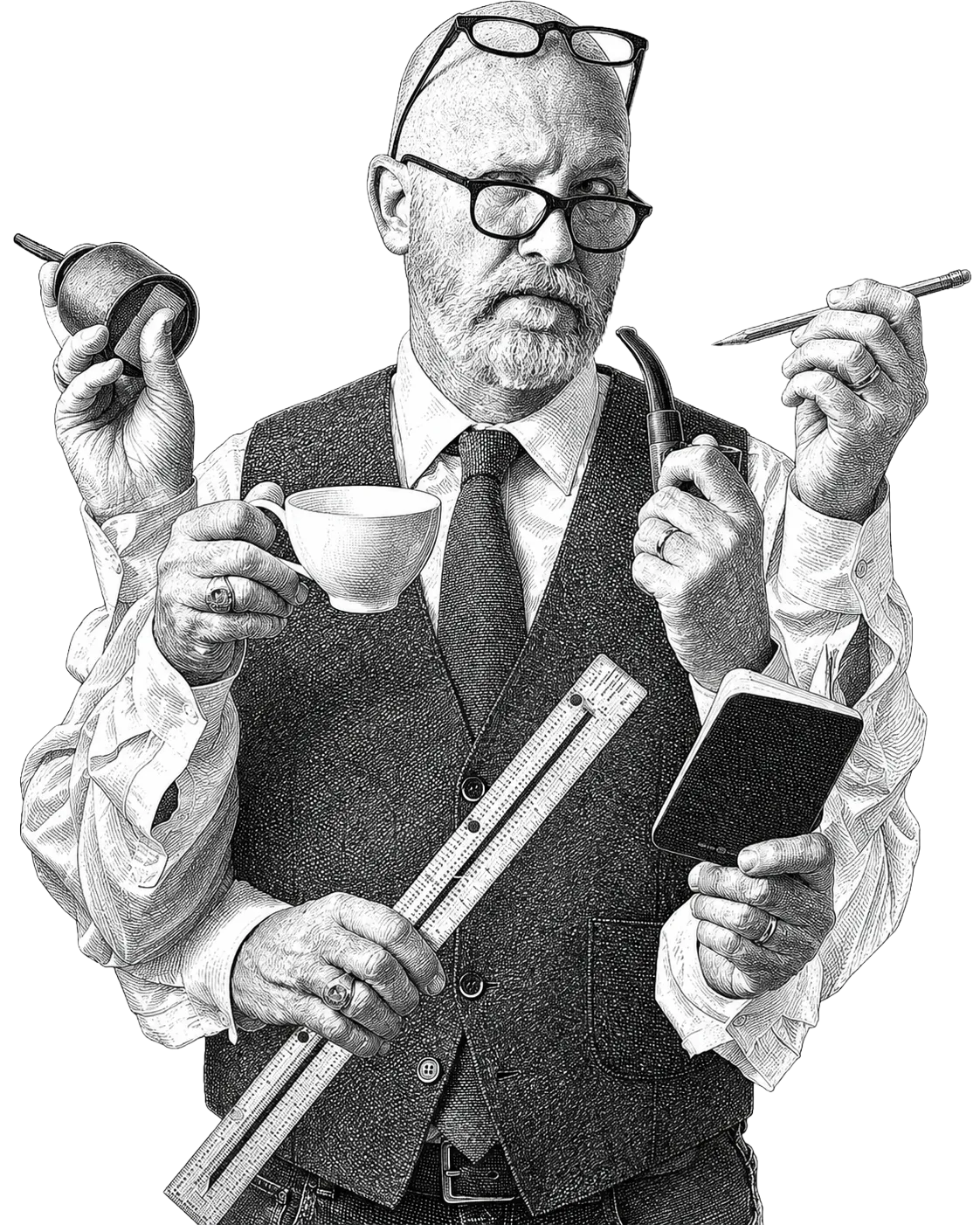
"How many people do you have?"
Since 1993, prospective clients have asked us that. Our answer has never changed: "How many do you need?"
That exchange explains a lot about WORK. We've never asked a problem to fit an org chart. We build the right team around the problem: one day relaunching a Fortune 500 brand, the next designing a matchbook cover, with exactly the same obsession.
Size was never the standard. The WORK was.


Named after the thing itself.
We named the company after the thing itself. Not the promise. Not the potential. The WORK.
It was a warning and a vow: talk is cheap here, and proof is the only currency.
The name still does its job. It tells you what we value before we've said a word.
Everyone suddenly has answers.
Ask a machine almost anything and it answers in seconds, fluently, confidently, endlessly.
Advice has never been cheaper.
So why do the biggest decisions still feel so hard?
Because AI made information abundant.
And judgment just became scarce.
Judgment is knowing which answer matters.
It comes from experience. Patterns recognized. Mistakes remembered. Questions asked before everyone rushes toward an answer.
Artificial intelligence can search farther, analyze faster and remember more than any human being.
Human intelligence can question, imagine, challenge and decide in ways machines cannot.
We believe the advantage belongs to organizations that learn to use both.
We call that Collaborative Intelligence™.
But intelligence still needs someone willing to use it.
Someone with enough distance to see what you may be too close to see.
Enough experience to recognize patterns.
Enough curiosity to ask better questions.
And enough candor to tell you what they actually think.
Big firms send teams.
WORK takes a seat.
The one across from yours.
Visionary leaders need visionary thinkers.
Talk is cheap. The WORK is the proof.
Every project, every industry, every client, preparing for one seat.
Cabell S. Harris has spent his career looking at business from different sides of the table.
As a creative director, learning how ideas move people.
As an agency founder and partner, learning how organizations work.
As an entrepreneur, building brands and businesses instead of only promoting them.
As a maker and licensor, learning what happens after an idea meets the market.
And as a professor at the VCU Brandcenter (the Adcenter when he joined in 2004), because teaching forces clarity, and clarity is the whole job.
Across healthcare, hospitality, finance, film, food, packaging, publishing, technology and more, one skill kept compounding: pattern recognition. Seeing the decision behind the decision. Knowing which question deserves to be asked next.
Behind many visionary leaders was someone who saw the world differently. One drove the business. Another helped shape how the world experienced it.
That's the seat WORK wants to occupy. Not the vendor. Not the agency. The one across from you.
Three eras. One standard.
1993 to 1999 · Era One: The first agency for agencies
WORK begins in Los Angeles as an agency for agencies, working behind the scenes with some of the country's best creative companies. Open 24/7/365, built around a network rather than an org chart. We saw firsthand how many different agencies worked: the good, the bad and the unnecessarily complicated. In 1999, WORK became a founding member of The Syndicate, Ogilvy & Mather's network of seven independent agencies.
Observe. Learn. Evolve.
2000 to 2019 · Era Two: Building ideas
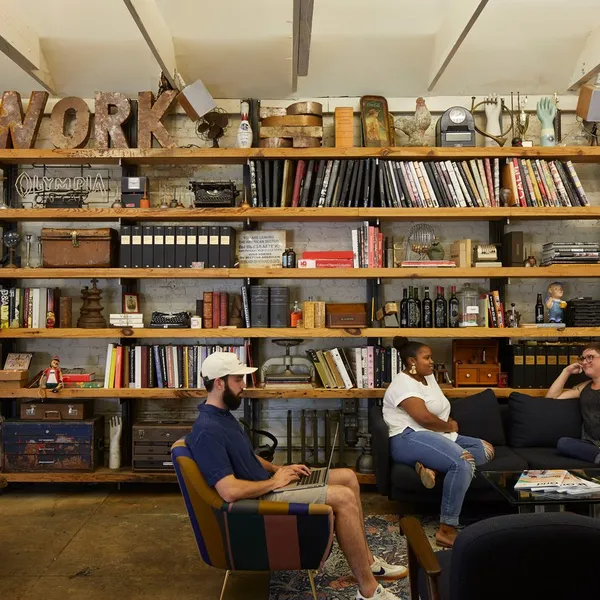
WORK stopped thinking only about what clients could build and began building its own: a house of brands, The Big Thinker's Brainstorming & Idea Co.™, products, intellectual property, and WORK & FRIENDS, a creative coworking space.
Agency → brand → product → venture.
2020 to today · Era Three: Building the future
AI changes what's possible. WORK develops Collaborative Intelligence™, Trivergent Thinking™, WORK Foundry™, the WORK 360º Evaluation™ and Bubble CI™: a new generation of systems built around what businesses need next.
The tools changed again. The standard didn't.
What we believe.
A company's beliefs shouldn't live in a brand book. They should show up in the decisions it makes. These are some of ours.
Candor saves a lot of time.
Better answers come from better questions.
A great strategy predictably executed is a waste of money.
A brand needs to know what to say before it figures out how to say it.
If you can't outspend the competition, outthink them.
Working with your client gets better results than working for your client.
Creative that doesn't solve a business problem is a business problem.
When you're having fun, you do your best work.
We practice what we preach.
The easiest advice to give is advice you never have to live with.
WORK has built products of its own for decades. We named them. Designed them. Made them. Priced them. Packaged them. Marketed them. Sold them. And occasionally discovered that our brilliant idea wasn't quite as brilliant as we thought.
That's useful.
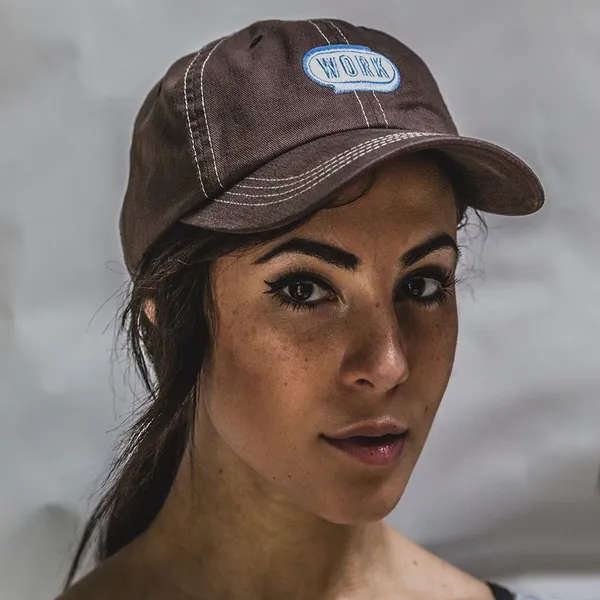
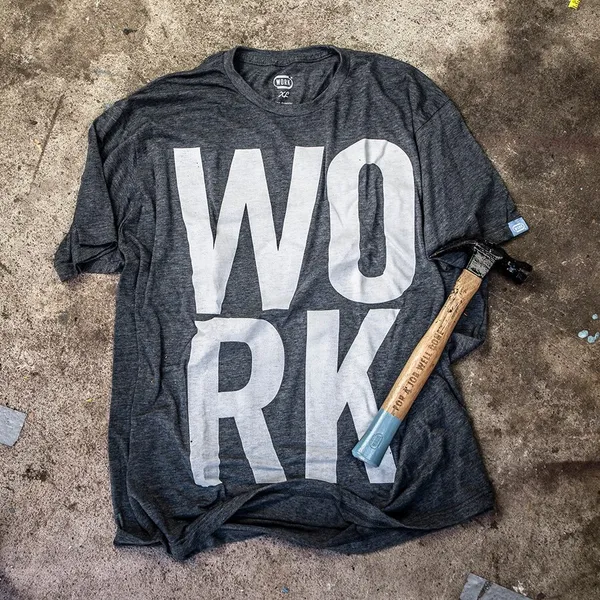
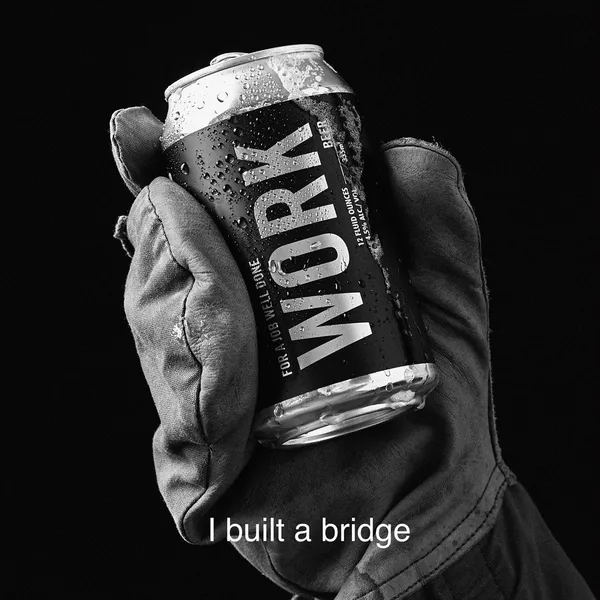
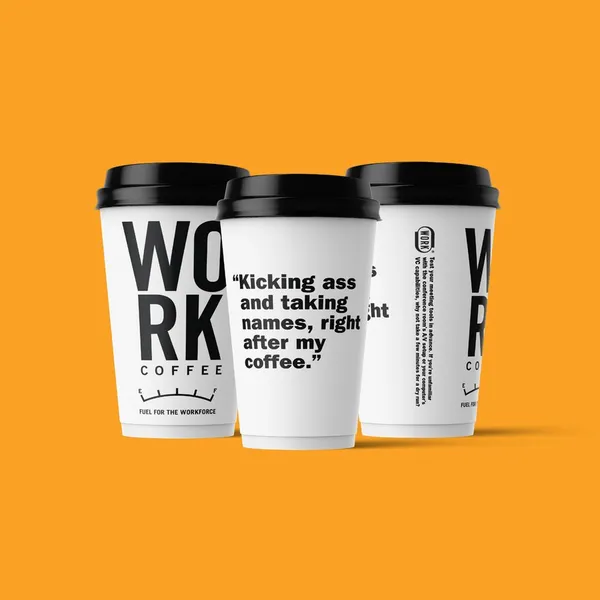
WORK Apparel. WORK Books. WORK Coffee. WORK Soap. WORK Beer. Different products. Same brand. Same standards.
Experience looks different from the inside.

Awards age. Standards don't.
"Cabell has one of those minds that combines a military strategist with a sense of humor, A.D.D. child with business acumen, and a mad professor with taste and a sense of composition. He's a wonderful, bright creative problem solver with more going on in his own head than most of the entire advertising industry today."
Cannes Lions. The One Show. The Clios. The Art Directors Club. Communication Arts. The Virginia Communications Hall of Fame.
We're grateful for the recognition. We're more interested in what we haven't made yet.
One person shouldn't be the right team for every problem.
Cabell S. Harris
Cabell leads the thinking, the creative direction and the relationships at WORK.
The WORK network
WORK was built as a network before networks were fashionable. Strategists. Writers. Designers. Developers. Researchers. Filmmakers. Technologists. Specialists. We assemble the people the problem requires, not the people payroll happens to provide.
How many people do we have? How many do you need?
The goal isn't to make WORK more dependent on its founder. It's the opposite.
For a long time, much of WORK's value lived inside one person's head: the patterns, questions, standards, frameworks, mistakes and judgment.
We're changing that. What WORK learns is being written down, systematized, taught and remembered, through our methods, our intellectual property, and systems like Bubble CI™.
The founder still sits at the table. The thinking no longer leaves the room when he does.
That makes WORK more useful today, and more valuable tomorrow.
The next thirty years are already in progress.